- Applicus Web
- News
- Uncategorized
- Marketing Trends in 2026: What’s New

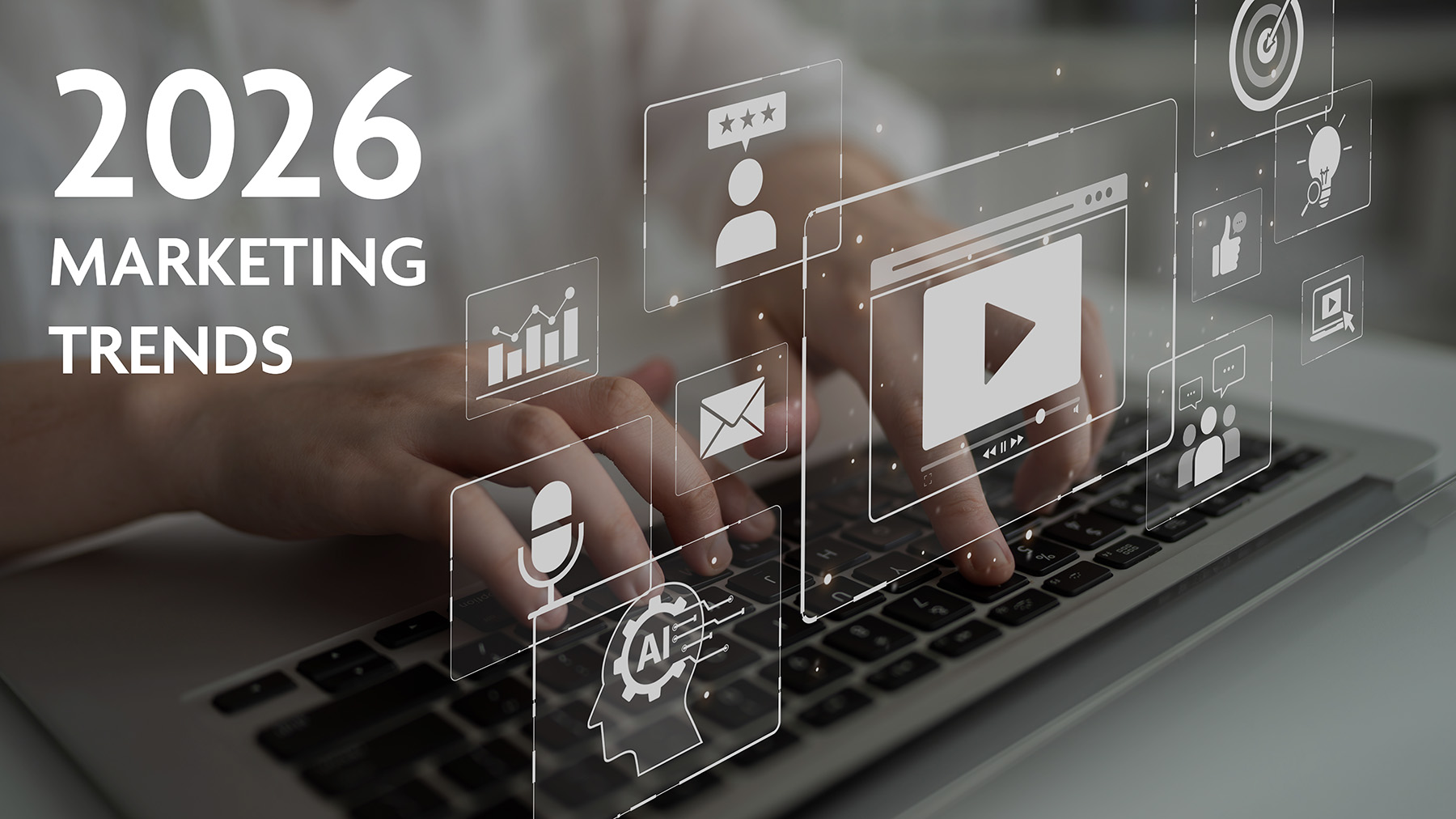
By 2026, marketing will have definitively transcended the boundaries of traditional communication. It will no longer be a separate department, but rather the architecture of business growth, directly impacting revenue, product development, and the customer experience. Companies no longer seek merely visibility—they are building cohesive, data- and technology-driven ecosystems.
In practice, we increasingly see that marketing decisions are not made solely within the realms of creativity and communication. They are planned in collaboration with IT, sales, and management teams. This integrated approach enables more accurate forecasting, faster responses to market changes, and the creation of long-term value.
In 2026, one trend is clearly evident: it is not those who speak the loudest who succeed, but those who act systematically.
Today, customers move between different channels without a clear beginning or end. The first contact might happen on social media, the decision might be made a few weeks later via a Google search, and the final action might take place after receiving an email.
That’s why your website, advertising, social media, content, and sales processes must function as a single, coordinated system. Customers expect a seamless experience regardless of where they first encounter your brand. Uncoordinated communication not only reduces conversions—it also erodes trust.
Fast-paced, superficial content is increasingly losing its value. In 2026, competitive advantage will be driven by:
– in-depth expert insights;
– real-world project examples;
– clearly resolved customer problems;
– consistent subject-matter authority.
Content is becoming not a marketing tool, but an infrastructure for trust. Companies that invest in education and an analytical approach build trust and, over time, reduce their dependence on paid advertising.
By 2026, artificial intelligence in marketing is no longer an experiment. It is used:
– by personalizing content in real time;
– when forecasting customer behavior;
– by automating segmentation;
– optimizingt advertisementsand budgets;
– generatesnt testus creativeus decision.
However, the most important thing is that AI enables faster decision-making. Modeling and scenario analysis take precedence over intuition. Companies that are able to integrate AI into their daily processes gain a speed advantage.
We believe that well-planned marketing and technology integration are becoming among the most important competitive advantages for businesses in today’s market. Let’s get in touch—sometimes a single idea or conversation can be the start of a new, successful project.
info@applicus.eu